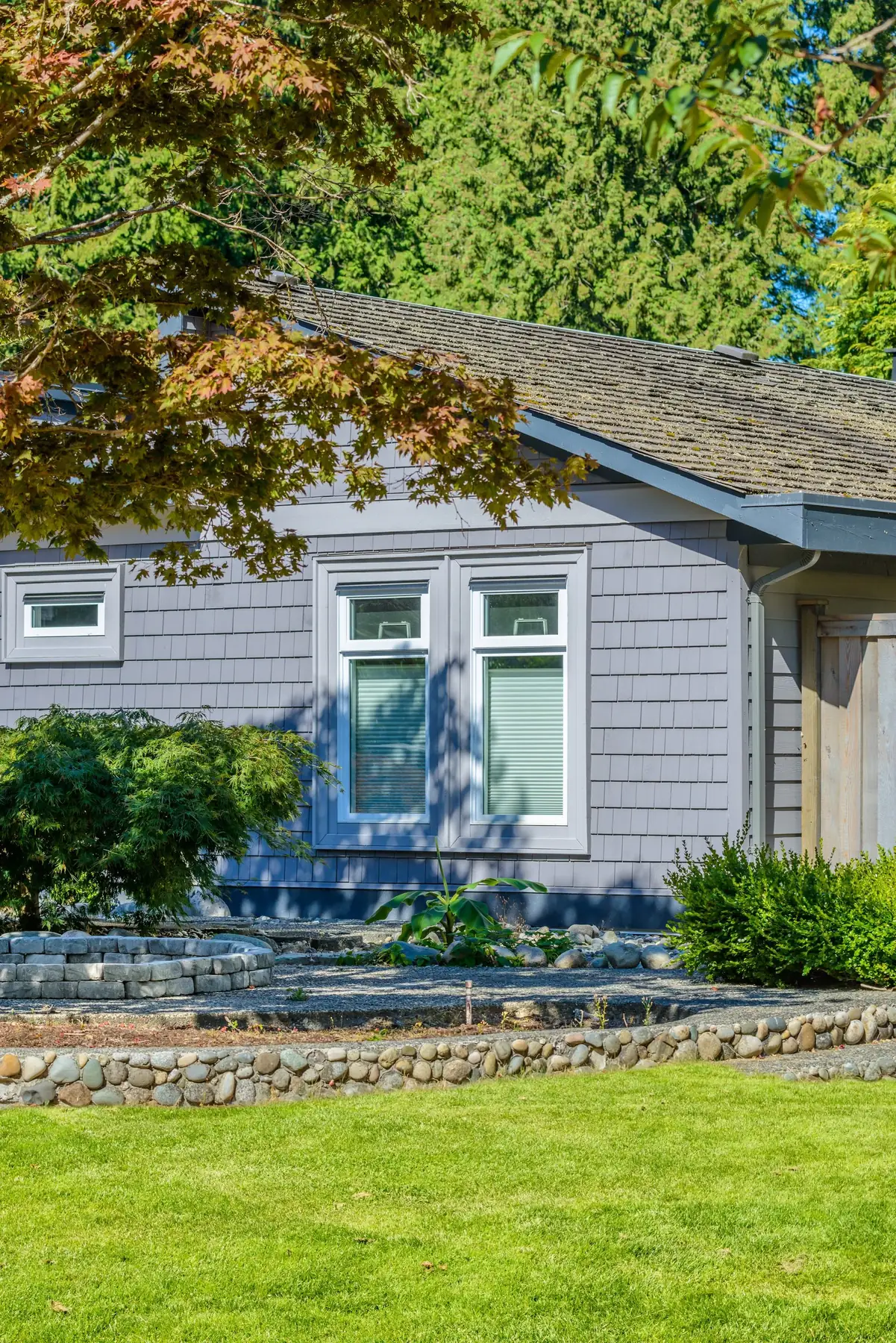
1. A real, separate entrance
Tenants rent privacy as much as square footage. A detached ADU almost always has this by default. On garage conversions and JADUs, we push hard for an entrance that doesn't require walking past the main house's living-room window or crossing a shared patio. If the only path is through a side yard, at least make the walk feel intentional: a gate, a light, a clean paver strip, a doormat area.
Units without this compromise on rent 5–15% below comparable listings with cleaner separation. It costs almost nothing at the design stage and is expensive to fix later.
2. Enough panel headroom to support the tenant's actual life
The ADU needs a heat pump for HVAC, an induction or electric cooktop (increasingly the default), an electric water heater or heat-pump water heater, a dryer, and enough general receptacle load for two adults working from home. That's easily 60–80 amps of load.
If the main house panel is 100A or 125A, budget the 200A upgrade as part of the ADU scope. It costs $4–$9K to do it during the build. Retrofitting later, after a tenant complains about the breaker tripping when they run the dryer and the induction cooktop, is the same money plus tenant friction.
3. In-unit laundry, even in the studio
The single most-cited rental deal-breaker on studios and small one-bedrooms is shared or no laundry. Compact stackable washer/dryer units are 24-inch wide, ventless if you use a heat-pump dryer, and fit in a closet under 8 sqft.
Adds $2,500–$4,500 to the build for the appliances plus the plumbing and vent stub. Bumps monthly rent by $150–$300 in the South Bay. Pays back inside 18 months and shortens time-on-market at every listing.
4. Storage the tenant can actually use
The typical ADU we quote has one 30-inch coat closet and one 6-foot bedroom closet. That's not enough. Real storage that moves rent:
- Bedroom closets with double-hang capacity, at least 5 feet of usable width.
- Bathroom vanity with drawer storage (not just doors under the sink).
- A pantry cabinet or open kitchen shelving equivalent to at least one full base cabinet's worth of dry-good storage.
- Exterior storage on the site: a small locking shed for bikes, tools, and seasonal items keeps them out of the living space.
The exterior storage alone can be a $1,500–$3,000 line item and reads as "wow" in showings.
5. A kitchen that reads like a home, not a hotel room
The compact kitchen decisions that photograph and show well:
- Full-height upper cabinets. Cabinets that stop 12 inches below the ceiling waste storage and read cheap in photos. Uppers all the way to the ceiling look built-in.
- A real range or cooktop plus wall oven, not a slide-in mini stove. The 24-inch apartment range is fine but the 20-inch mini fails on rental listings.
- A hood that vents outside. Recirculating hoods leave cooking smells in the unit and hurt second showings.
- An actual counter run of at least 4 feet of clear prep space uninterrupted by sink or cooktop.
None of these cost much more than the cheaper alternatives; they're specification decisions, not budget upgrades.
6. Real windows, real light, real ceiling height
The three physical characteristics that move ADU rent more than finish level:
- Window area. At minimum, meet the code-required glazing percentage; if you can, exceed it. Corner windows in bedrooms feel expensive. Casement windows read as intentional design.
- Ceiling height. Nine-foot ceilings vs eight-foot ceilings show meaningfully better in every photo. If the roof geometry allows a vaulted ceiling in the main living area, spend the money.
- Cross-ventilation. A tenant who can open windows on two sides gets summer airflow. This shows up in reviews and referrals.
7. Sound isolation from the main house
For attached ADUs and garage conversions, the shared wall is the biggest source of tenant complaints. What we recommend on every attached unit:
- Double-stud or staggered-stud wall assembly with dense-pack insulation.
- Two layers of 5/8-inch drywall on the ADU side with a sound isolation compound between layers.
- Sealed penetrations at every outlet, switch, and pipe passing through.
- Solid-core interior doors between shared spaces (if any).
Adds $2,500–$5,000 to a typical wall. Homeowners who skip it find out about the trade-off within the first month a tenant moves in.
8. A private outdoor space, even if it's small
Ten square feet of usable outdoor space that's clearly the tenant's, not shared with the main house, changes how the unit shows. A small patio slab with room for two chairs and a plant, screened from the main-house sightlines, is often all that's needed. On tight lots a 6-by-8 flagstone landing at the front door with a low hedge for privacy is enough.
Cost: usually under $2,500. Rental appeal: outsized. Small private outdoor spaces show meaningfully better in listing photos than an unclaimed shared yard.
Where budgets should stretch and where they should cut
Cost centers worth defending during value engineering:
- Panel and electrical capacity.
- Windows, doors, and glass area.
- Sound isolation on shared walls.
- In-unit laundry rough-in.
- Kitchen appliance quality (Bosch, Frigidaire Gallery, or better, not the bottom shelf).
Cost centers you can trim without hurting rent:
- Flooring: quality LVP shows as well as engineered hardwood in rentals.
- Countertops: quartz remnants and small slabs work fine in an ADU-sized kitchen.
- Bathroom fixtures: mid-tier faucets and toilets from a domestic brand are indistinguishable from designer-name equivalents at the rent tier ADUs occupy.
- Tile: field tile at $3–$5/sqft looks great when installed cleanly.
What we ask before design starts
Three questions we push through at the first client meeting:
- Who's the target tenant? A young professional, a downsizing parent, a returning adult child. The target changes every choice above.
- How long do you plan to hold the unit as a rental? Under 5 years and some of these upgrades don't pay back; over 10 and every one of them does.
- Are you willing to run the unit like a small business? The units that consistently rent at the top of the range are managed like a business: clean listings, quick maintenance response, decent photography. That mindset starts at design.
The compounding effect of these eight decisions is real. On a typical 700 sqft one-bedroom in the South Bay, the difference between a well-designed unit and a value-engineered one can be $400–$700/month in achievable rent, and the difference in cost between the two is usually under $25K at build. That math holds up over a 20-year hold.
Frequently asked questions
How much can a well-designed ADU rent for in the South Bay?
Rents depend on unit type and location, but typical 2026 ranges are $1,800–$2,400/month for a studio, $2,400–$3,200 for a one-bedroom, and $3,200–$4,200 for a two-bedroom. Willow Glen, Cambrian, and Los Gatos-adjacent addresses rent at the top of the range.
Is in-unit laundry actually worth the added cost?
Yes, almost always. Ventless heat-pump stackables add roughly $2,500–$4,500 to the build but bump monthly rent by $150–$300 and materially reduce time-on-market. Payback is usually inside 18 months.
Do I need a separate electrical panel for the ADU?
Not typically. A properly sized subpanel fed from the main house works for most detached ADUs. The main house panel does need enough capacity to support the additional load, which is why a 200A service upgrade is often part of the ADU scope.
What finish level makes sense for an ADU?
Slightly above rental average, not custom-home level. Quartz counters, quality LVP flooring, mid-tier appliances, and clean paint carry the unit. Splurging on high-end finishes rarely returns proportional rent.